
| Category: Assembly & Machine Language [C64] |
|
|
This book is not intended to teach you machine code on the CBM 64. It contains 40 machine code routines that can be used in your Basic or machine code programs to do things that are not implemented in the standard BASIC or operating system in your Commodore 64. The book includes a listing of Supermon which is a public domain assembler I disassembler written by Jim Butterfield (thanks Jim). It can be used to enter the programs in this book if you do not possess an assembler. The listings are all given twice: once in an assembled listing from the PAL assembler from Proline Software (this, along with POWER, is the best machine code development package that I have seen), and once in a disassembled version suitable for entering with Supermon or similar. |
|
| 2023-08-02 English PDF 2.99 MB 7 |
This book presents practical application techniques for the 6502 microprocessor. It assumes an elementary knowledge of microprocessor programming on the level of the preceding book in this series (Reference C202: Programming the 6502). Understanding how to program the microprocessor chip itself (the 6502) is only a prerequisite for the actual programming of a microprocessor board connected to real devices. |
|
| 2020-05-16 English PDF 8.37 MB 1,180 |
This book presents practical application techniques for the 6502 microprocessor. It assumes an elementary knowledge of microprocessor programming on the level of the preceding book in this series (Reference C202: Programming the 6502). Understanding how to program the microprocessor chip itself (the 6502) is only a prerequisite for the actual programming of a microprocessor board connected to real devices. |
|
| 2020-05-15 English PDF 8.74 MB 805 |
This book presents practical application techniques for the 6502 microprocessor. It assumes an elementary knowledge of microprocessor programming on the level of the preceding book in this series (Reference C202: Programming the 6502). Understanding how to program the microprocessor chip itself (the 6502) is only a prerequisite for the actual programming of a microprocessor board connected to real devices. |
|
| 2020-05-15 English PDF 11.72 MB 782 |
6502 ASSEMBLY LANGUAGE PROGRAMMING provides comprehensive coverage of the 6502 microprocessor assembly language. Features included in 6502 ASSEMBLY LANGUAGE PROGRAMMING:
|
|
| 2023-08-02 English PDF 30 MB 6 |
If you want to use a specific assembly language routine, learn assembly language quickly, or improve your programming skills, 6502 ASSEMBLY LANGUAGE SUBROUTINES is for you. It provides code for more than 40 common 6502 subroutines, including code conversion, array manipulation,arithmetic, bit manipulation, string processing, input/output, and interrupts. It describes general 6502 programming methods (including a quick summary for This book identifies strengths and weaknesses of the 6502 instruction set, and allows you to make instant use of 6502 assembly language. You can use these subroutines to
|
|
| 2023-08-03 English PDF 40.86 MB 4 |
Learn how to play sophisticated games in the powerful 6502 assembly-level language—and learn the assembly language as well. 6502 Games lets you play the ten games shown below, but it does much more: it teaches assembly language programming in a straightforward and enjoyable manner. You will learn the techniques of algorithm design and data structures so you can program your 6502 not only to play games but also to perform a variety of tasks, from home applications to industrial controls. |
|
| 2023-08-03 English PDF 9.02 MB 2 |
The 6502 integrated circuit is a very popular microprocessor that is currently being used in general-purpose micro computers, video games, and personal computers. Chapter 1discusses the characteristics of the 6502 integrated circuit and the AIM 65 microcomputer. Although the AIM 65, a 6502-based microcomputer manufactured by Rock'tve ll Internat ional, has been used to generate and test the program examples given in this book, most of the programs listed can be used on aH 6502-based micr )computers. However, they may have to be slightly altered to reflect the memory and I/O devices that are wired to your microcomputer. |
|
| 2023-08-03 English PDF 18.35 MB 3 |
Here is the perfect reference guide and programming tool for programmers of 6502-based microcomputers. The 6502® User's Manual contains all the information you need for assembly and machine language programming, and for performing hardware interfacing chores. Joseph Carr, also the author of the popular Z-80™ User's Manual, includes comparisons of micro, mini, and main frame computers, and looks at applications categories for microcomputers in general and for the more popular 6502-based machines in particular. This valuable guide covers: Introduction to Microprocessors and Microcomputers; 6502 Architecture; 6502 Pinouts; Timing and Control Signals; 6502 addressing Modes; 6502 Status Flags; 6502 Instruction Set (General); 65xx-Family Support Chips; Device Selection and Address Decoding; Interfacing Memory to the 6502; Interfacing 1/0 Devices to the 6502; Interfacing Peripherals to the 6502; Interrupts; Interfacing with the Apple II BUS; Interfacing with the KIM-1, AIM-65 and SYM-1; 6502 Instruction Set (Detail). |
|
| 2023-08-03 English PDF 156.59 MB 9 |
This book has been designed to teach you advanced programming techniques for the 6502 microprocessor in a systematic and progressive way. Developing a program involves devising a suitable algorithm and appropriate data structures, and then coding the algorithm. In the case of a microprocessor such as the 6502, the design of the algorithm and the data structures is generally constrained by three conditions: 1. The amount of memory available is often limited or must be minimized; i.e., the program must be terse. 2. The highest possible execution speed may be required. Efficient coding of the program into assembly level language instructions then becomes an essential consideration. In particular, the use of registers must be optimized. 3. The specific input/output design requires an understanding of the input and output chips and their programming. |
|
| 2023-08-04 English PDF 9.13 MB 3 |
This book aims to teach you the rudiments of machine code programming, with a couple of chapters on BASIC just to limber up. Commands are introduced slowly, with plenty of explanation and sample listings to work from. A feature used throughout the book is a small arcade game, which is gradually built up from chapter to chapter, using commands introduced in each chapter. |
|
| 2019-09-16 English PDF 3.55 MB 1,357 |
This book is intended to complement Ian Sinclair's Introducing Commodore 64 Machine Code. The word 'Advanced' appears in the title although this should in no way deter beginners providing they possess tenacity and sufficient dedication. It is assumed, however, that readers already have a little experience with BASIC. |
|
| 2019-09-22 English PDF 8.24 MB 1,496 |
The material in this book builds on the fundamentals of machine language programming as found in the book The Machine Language Book for the Commodore 64. In this book we will show you how to make use of many the Commodore 64's special features and capabilities using machine language. The book is divided into three major sections. The first section concerns the internal representation of numbers on the Commodore 64 and describes in detail how the computer performs calculations and how its math routines can be used from machine language. In addition to the conversion of numbers between the various formats, the main emphasis of this section lies in writing arithmetic functions which can be used from BASIC with the help of the USR function. The second section deals with a specialty of machine language: interrupts. After explaining some of the terms, interrupts are discussed in detail. Many sample programs illustrate the variety of uses for interrupt handling. At the close of this section, a machine language program demonstrates how BASIC subroutines can be controlled with interrupts. The third and final section presents the concept of vectors in both the BASIC interpreter and kernal. The individual vectors are described and the procedure for adding your own commands is explained. The implementation of the REPEAT-UNTIL structure is used to demonstrate this. |
|
| 2023-08-08 English PDF 16.02 MB 5 |
LEARN ASSEMBLY LANGUAGE PROGRAMMING If you'd rather be one of the kids who writes professional quality arcade games than one who just plays them, learn machine/assembly language programming. WHAT COMPUTER? Everything in this book is for the Commodore 64. Youll get the right information for your computer; not everyone else's. WHO'S THIS BOOK FOR? If you know BASIC and want to learn the fastest language in programming: this book is for you. (If you're an adult, tell them you got it for your nephew in Borneo.) This is an elementary book for learning to use assemblers and assembly/machine language programming on your Commodore 64. WHICH ASSEMBLER? Three assemblers are fully covered, and most others for the Commodore 64 are compatible with all programs. Commodore's assembler, The Commodore 64 Macro Assembler Development System, is clearly explained with lots of examples. The Merlin assembler is clearly explained with lofs of examples. If you don’t have an assembler, there's a simple-to-learn and use listing of the Kids’ Assembler written in BASIC for you free in the book. The Kids' Assembler assembles programs for you, and it will help you learn about assembly/machine language programming. WHAT YOU GET
|
|
| 2023-08-08 English PDF 20.51 MB 3 |
Welcome to life in the computer fast lane—programming with assembly language. Programs written with assembly language have the execution speed required to create lively graphics and sounds in games and educational software. Precision measurement, control, and communications applications also require the speed provided by assembly language programming. In writing this book, we assumed that you have a beginning knowledge of the BASIC programming language. You do not have to be an expert, but it will help you to learn assembly language if you can write programs in either BASIC or some other high-level language. Most programmers do not begin their program ming career by learning assembly language: they begin with a high-level language such as BASIC, FORTRAN, or Pascal. Once you learn assembly language, you will have the best of both worlds: the speed provided by assembly |
|
| 2023-08-08 English PDF 28.64 MB 6 |
Use your 6502 personal computer for more than games! Learn how it works and how to make it work for you. This book, for Apple, Atari, Ohio Scientific and PET computer owners who know little or nothing about bits, bytes, hardware, and software, presents a guid¬ ed tour of your computer. Beginning with basic concepts such as what is memory? and what is a program?, Beyond Games moves through a fast but surprisingly complete course in assembly language programming. Having mastered these fundamentals, the reader is introduced to many useful subroutines and programming tools, such as screen utilities, print utilities, a machine language monitor, a hexadecimal dump tool, a move tool, a disassembler, and a simple, screen-based text editor. |
|
| 2023-08-03 English PDF 28.06 MB 5 |
The Commodore 64 Assembler Workshop is aimed at those of you who have been delving into the delights of programming at machine code level. It is a natural progression from Commodore 64 Assembly Language, but will be invaluable even if you learned assembler and machine code using any of the other relevant books available. It provides a bench full of useful assembly language routines and utilities programs and examines the techniques involved. |
|
| 2023-03-28 English PDF 10.71 MB 1,059 |
At the centre of your Commodore 64 microcomputer is the 6510 microprocessor which is responsible for coordinating and controlling every single thing your Commodore 64 does while it is switched on. The microprocessor can be programmed in its own language machine language-and that is the aim of this book, to teach you just how to program your micro at its very own machine level. The text assumes that you have some knowledge of CBM BASIC but know absolutely nothing about machine code. I have tried very hard to write in a non-technical language and to set the chapters out in a logical manner, introducing new concepts in digestible pieces as and when they are needed, Commodore 64 Assembly Language is completely self-contained, includes a full description of all the machine code instructions available and suggests suitable applications for their use. After a 'bit of theory' in the opening chapters, the main registers of the 6510 are introduced and descriptions given of how , when and where machine code routines can be entered.There isalso a simple machine code monitor program to facilitate the entry of such routines. After discussing the way in which the 6510 flags certain conditions to the outside world, some of the modes of addressing the chip are described. Machine code addition and subtraction are introduced and the easiest ways of manipulating and saving data for future use by the program and processor are described. Machine code loops (equivalent to BASIC's FOR . . . NEXT . . . STEP) show how sections of code may be repeated, and subroutines and jumps take the place of BASIC's GOSUB and GOTO. Also included is a look at some of the more complicated ·procedure s such as multiplication and division using the shift and rotate instructions, and producing sprites in The Kernal is a very important part of the Commodore's set-up, so no expense has been spared in explaining every Kernal routine in detail. Practical examples show how the more important ones can be used. Finally, a comprehensive set of appendices provide a quick and easy reference to the sorts of things you'll need to 'want to know quickly' when you start writing your very own original machine code programs! |
|
| 2023-08-10 English PDF 2.6 MB 7 |
Unlock an exciting new dimension of your C-64's graphics capabilities that's just not possible when you program in BASIC! Discover how you can create amazingly sophisticated arcade-type games featuring the fast-paced, animated action and sophisticated sounds used in arcade video machines and commercially produced computer games retailing for upwards of $40! Even find out how you can use assembly language game techniques to better control your C-64 in all types of programming applications! |
|
| 2025-09-16 English PDF 44.61 MB 67 |
A complete course in assembly language programming for the absolute beginner. Successfully master the challenge of assembly language on the Commodore 64 with this step-by-step approach. The course provides a self-paced structured learning experience matched with a full featured assembler on the enclosed software. The easy-to-understand introduction leads you to ll the essentials of assembly language programming: branching, screen display, addressing modes, interrupts, macro instructions, floating point calculations, and using the built-in subroutines of your Commodore 64. The Software contains a full-featured assembler complete with labels, memory labels, macros, and more. Plus a binary hexadecimal conversion tutor. The Book contains carefully sequenced instruction in assembly language programming, detailed explanations, and exercises with their solutions. Plus the complete 6510/02 instruction set and a complete listing of the Commodore 64 ROM with cross references for the VIC and PET ROMs for conversion from and to other Commodore microcomputers. |
|
| 2023-08-12 English PDF 14.37 MB 10 |
The Commodore 64 has become one of the most popular home computers in Europe and the USA. It is a versatile and interesting machine. The aim of this book is to show you how to enhance its abilities still further, by learning the rudiments of Machine Code programming. Want to fill the TV screen with a grid of symbols, in the twinkling of an eye? Move sprites around fast enough to playa reasonable game? Count how many times the REM character occurs in a program? Then it's Machine Code you'll need. It places many more demands on the programmer than BASIC does; but as a reward, it expands the range of tasks that your computer can do. |
|
| 2022-12-16 English PDF 7.51 MB 863 |
This is not yet another machine code book for a popular micro which spends half its pages explaining all the 6502/6510 machine code instructions and their various addressing modes, with a crude loader program and a number of machine code routines of dubious usefulness tacked onto the end. The intention of this book is to provide its readers with a solid BASIC program for the entry of machine code and assembly language routines and, along with it, a selection of machine code programs that are worth having. |
|
| 2023-08-23 English PDF 6.59 MB 5 |
Here it is! The first complete book about Assembly language for both the Commodore 64 and 128 computers. You'll use this extensive collection of Assembly programs again and again. You'll also learn how to:
This book is more than just a reference book. More than a 6502 Assembly manual. It's a hands-on, step-by-step guide to programming with three of today’s popular assemblers: the Commodore 64, Merlin 64™, and Panther C64™. So whether you own a Commodore 64 or 128, all you need is your computer and this book. And you can quickly master the intricacies of Assembly language programming. Sams makes it easy! |
|
| 2023-08-10 English PDF 127.32 MB 7 |
This book takes a different approach. Instead of choosing between the machme code programming expert and the professional communicator, we've used both. Andrew is a professional programmer on the CBM 64, while I'm a computer journalist and consultant by profession. We believe that, by working together, we've come up with a guide which is far easier to use than any other on the same subject. |
|
| 2019-10-06 English Commodore 64 16.72 MB 1,393 |
Sooner or later, many programmers find that they want to learn machine language. BASIC is a fine general-purpose tool, but it has its limitations. Machine language (often called assembly language) performs much faster. BASIC is fairly easy to learn, but most beginners do not realize that machine language can also be easy. And, just as learning Italian goes faster if you already know Spanish, if a programmer already knows BASIC, much of this knowledge will make learning machine language easier. There are many similarities. This book is designed to teach machine language to those who have a working knowledge of BASIC. For example, Chapter 9 is a list of BASIC statements. Following each is a machine language routine which accomplishes the same task. In this way, if you know what you want to do in BASIC, you can find out how to do it in machine language. |
|
| 2023-10-21 English PDF 24.3 MB 396 |
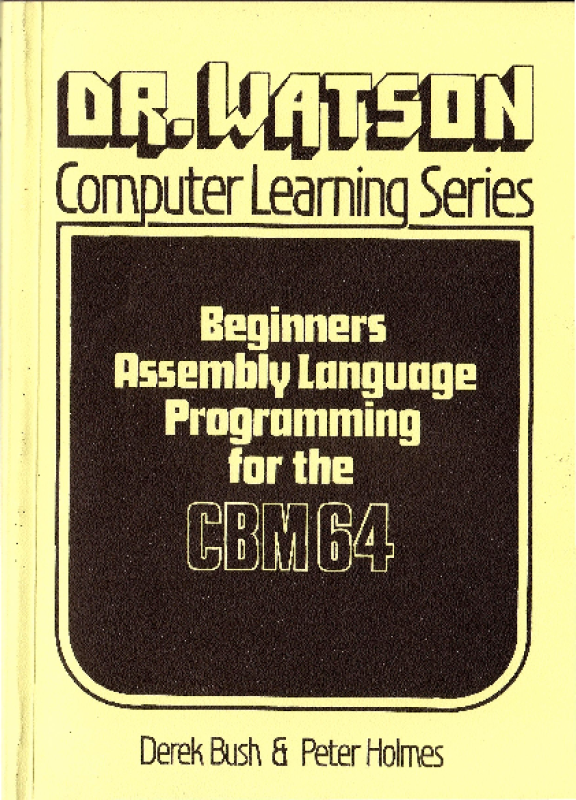
This book is a self-paced course on machine-code / Assembly-language programming based on the 6510 microprocessor. Getting going in assembly-language is said to be a major problem for the beginner. However, it's a problem that we trust will disappear when the beginner's hands get on this book. |
|
| 2020-03-04 English PDF 7.49 MB 1,351 |
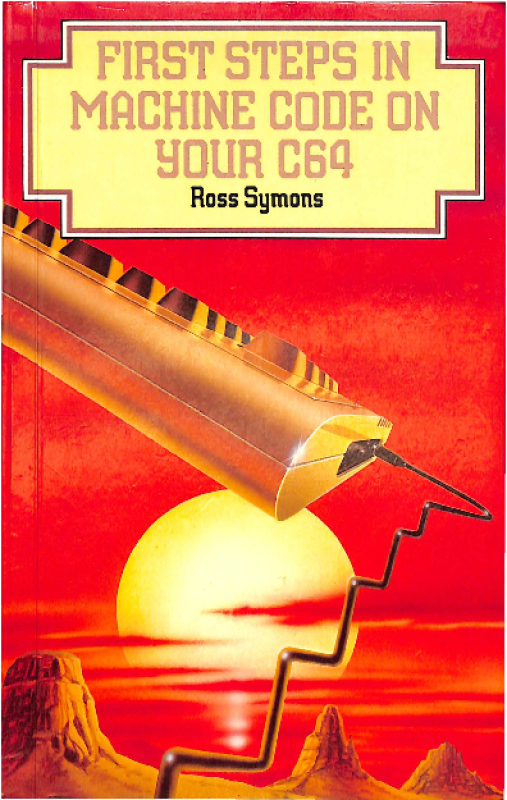
If you've mastered BASIC programming on your Commodore 64 and are ready to move on to bigger and better things, then book will show you the way. Ross Symons first introduces you to the disassembler and explains its use. After making this acquaintance, the complete instruction set for the 6510 (the chip at the heart of your computer) is listed. Each instruction is explained with the aid of a demonstration program which will help even the newcomer to machine code to get to grips with the C64 and extract the most from this powerful micro. Other sections include a discussion of the KERNAL operating system, and its applications such as printing, input/output devices, and scanning the keyboard, are also considered. As an exciting bonus, the book ends with two complete machine code games which show you how to create your own worthwhile, high-speed, animated arcade-like games. |
|
| 2021-11-28 English PDF 3.94 MB 1,428 |
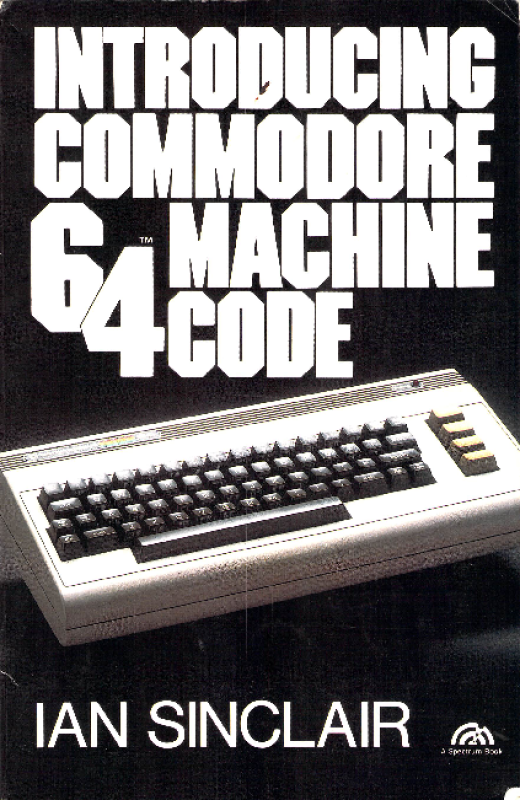
This book has two main aims. One is to introduce the Commodore 64 owner to some of the details of how the Commodore 64 works, allowing for more effective programming even without delving into machine code. The second aim is to introduce the methods of machine code programming in a simple way. |
|
| 2019-09-22 English PDF 12.63 MB 1,138 |
The Visible Computer: 6502 Machine Language Teaching System combines this manual with a diskette containing a 6502 simulator program to provide a systematic way to learn machine language programming on the Commodore 64 computer. |
|
| 2019-09-18 English PDF 8.36 MB 1,133 |